Planning, Assessment, and Evaluation
This section highlights unit and lesson plans designed using backwards design to intentionally meet curriculum expectations. It also demonstrates my understanding of assessment for, as, and of learning through authentic classroom practice, including samples of student work, descriptive feedback, and next steps. Together, these artifacts show how planning, instruction, and assessment are thoughtfully connected to support student learning.

Planning- Critical Literacy Unit Plan
This grade 6 Critical Literacies unit invites students to explore and value Anishinaabe Indigenous identity through diverse texts, storytelling, and research, while developing their own personal written connection to the land. As a non-Indigenous educator, I recognize that it is my role to teach with humility, accuracy, and respect by centering Indigenous voices (including a Knowledge Keeper and Indigenous-authored texts), using reliable sources, and creating space for students to reflect on reconciliation and their responsibilities to the land. Across the unit, students built personal understanding of Anishinaabe ways of being and knowing, practice critical literacy skills (purpose, research, organizing ideas, voice, revision, and presentation), and produce a final piece that demonstrates thoughtful personal voice alongside cultural respect in a cross-curricular way.
Building Connection Through Collaborative Games and Social-Emotional Learning- Grade 4/5 Gym Unit
This Grade 4/5 Physical Education unit focuses on building strong relationships, emotional awareness, and a sense of belonging through inclusive, cooperative games. Students engage in a variety of movement-based activities that emphasize communication, teamwork, perseverance, and self-awareness while learning to manage emotions, cope with challenges, and move safely. Throughout the unit, physical activity is intentionally used as a vehicle to develop social-emotional learning skills, helping students recognize their strengths, support others, and experience success through collaboration rather than competition.
Assessment and Evaluation- Assessment For Learning
As we were beginning our drama unit, we were starting to look at drama elements (character/role, time and place, tension, and focus). To assess students' prior understanding of drama elements, I allowed them to build their own story using sentence stems. Afterwards, I would walk around and ask students questions to see where each drama element was in their story. The circled choices give immediate evidence of:
- Do students understand what a character is?
- Can they identify time and place?
- Do they understand what creates tension in a story?
- Do they recognize focus and resolution?

Assessment As Learning
For our reflective journal writing unit, students were beginning to look at 'would you rather' prompts. For this specific activity, students were asked: Would you rather be able to talk to animals or be able to turn invisible when you want to? For assessment AS learning, the student is making choices and justifying them. The student is thinking about their own thinking and they are reflecting on what they prefer, why they prefer it, and how that choice connects to their feelings.
The journal template prompts students to reflect on:
- Their opinion
- Multiple reasons
- Feelings
- A closing thought
They can self-check:
- Did I give reasons?
-Did I explain how I feel?
-Did I finish my ideas?
This supports students ownership of learning, which is core to assessment AS learning

Assessment Of Learning
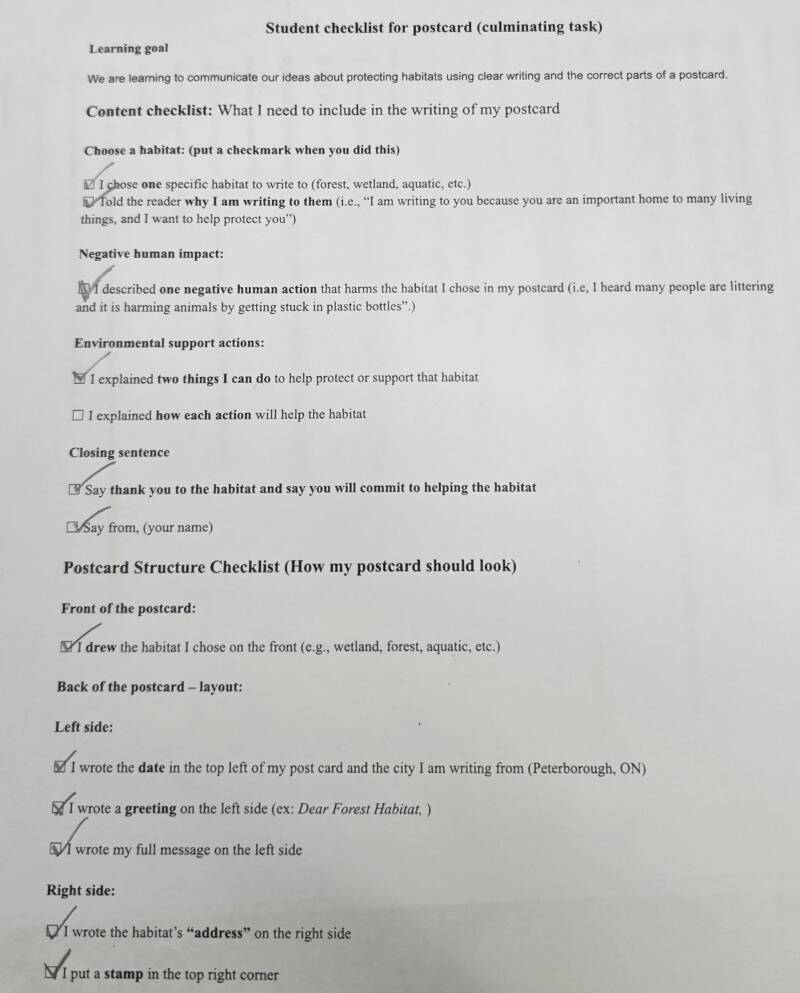
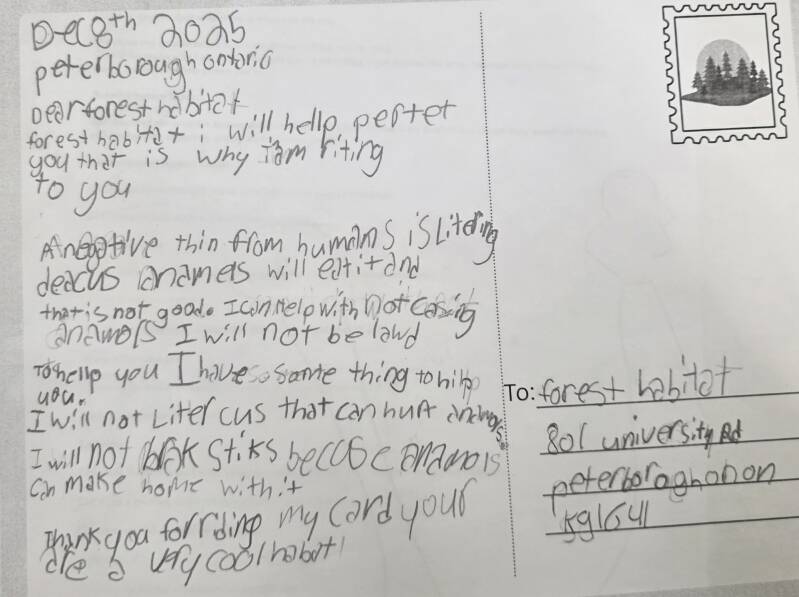
For student's final science culminating task, they were asked to write a postcard to a local habitat and provide two environmental ways they would like to support their habitat of choice. They were asked to use their self-assessment checklist to ensure they were meeting the criteria for this final assignment.
What students submit:
- A completed postcard (front and back)
- Clear written message
-Correct postcard structure
-How to communicate ideas in postcard form
Completed Postcard
Single-Point Rubric- Feedback and Next Steps

Brainstorming Process

Student Checklist for Culminating Task